Lived Experience Sports Advisory
Making sport more accessible through lived experience
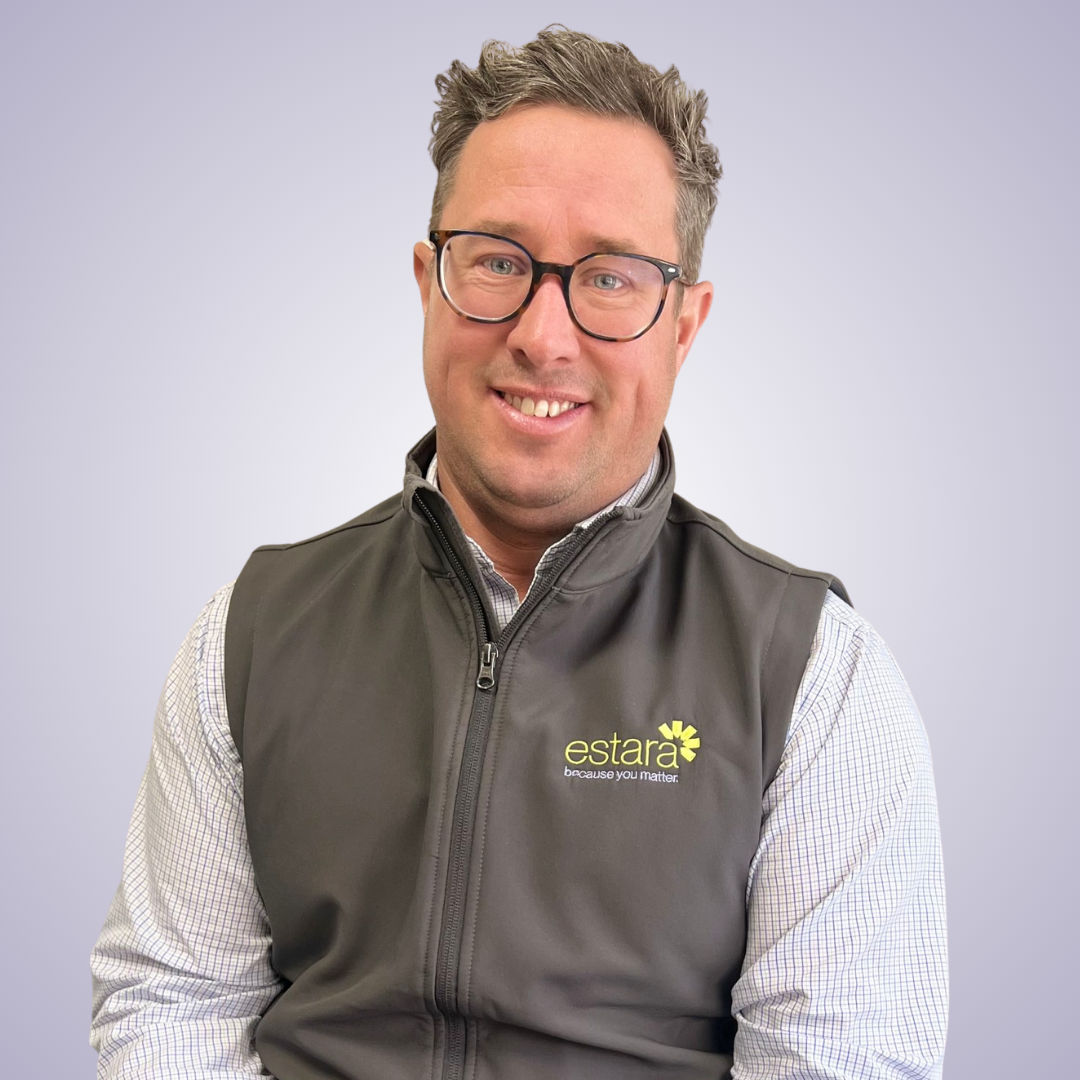
Our Lived Experience Sports Advisory service is led by Program Manager Scott Crowley, an experienced para-athlete with lived experience of spinal cord injury.
Scott is passionate about helping sporting organisations remove barriers and create more opportunities for people with physical disability to participate in sport.
Combining lived experience with practical sporting expertise, Scott provides advice to help organisations understand what accessibility and inclusion look like in practice – from facilities and programs to coaching and participation pathways.
How we can help
Club and facility accessibility reviews
Inclusive program design
Coach education and awareness
Participation and competition pathways
Event accessibility
Disability Inclusion Action Plans
Policy and project advice
Co-design with people with lived experience
We work with sporting clubs and codes, councils, education providers and government to provide practical, actionable advice grounded in lived experience.
Get in contact with Scott
From Whistler to the World Stage:
Scott Crowley's Journey Into Wheelchair Sport
Scott Crowley has represented Australia on the world stage, lived in Italy as a professional athlete, and completed an Ironman. Today, he's the Program Lead for Estara's new Wheelchair Community Sports SA program. We sat down with Scott to talk about the accident that changed his life, how sport brought him back into the world, and why he wants Estara’s Wheelchair Community Sports SA program to be the "front door" for anyone wanting to get involved.
He spent two weeks in the spinal unit in Vancouver before flying home to Adelaide on a stretcher, via Hawaii and Sydney. He then spent a month in the Royal Adelaide Hospital waiting for a bed in the spinal unit, followed by three months of rehabilitation at Hampstead, learning the basics again: showering, dressing, driving.
"I guess the hardest part was just understanding the change," Scott says. "You go from being super active. All I did was skateboard, snowboard and surf, and then you can't do any of that. It's an identity thing too. So, then what do you do? From my experience, you’ve got to keep busy."
Finding His Way Back Through Sport
After his accident, Scott was halfway through a Bachelor of Management at the University of South Australia. He took a year off, then returned and finished the degree, but it was sport, not study, that gave him a way back into the world.
During his time in the spinal unit, Scott met people who were training for wheelchair basketball, some of them Paralympic gold medallists from the Atlanta Games. Watching them race around the court, and fly interstate most weekends to play, changed how he saw what was possible.
"Interacting with those guys really opened the door in regards to what you could do," Scott says. "It's not like you need to be wrapped in cotton wool. You can do basically anything you want, it's just done a bit differently. I used sport as a mechanism to engage back into society."
He started with tennis, playing socially with mates before entering the Australian Open in 2004. "It wasn't what it is now, but I've still got an old t-shirt that says Australian Open 2004, and I can say that I did it."
From there, Scott moved into wheelchair basketball full-time. South Australia didn't have a state team, so he trained with Australian squad players who flew in from Perth and the eastern states for camps. He made an Australian development squad in 2006 and went on to represent Australia before he'd even played for his home state. He captained and vice-captained the Adelaide Thunder in the National League.
Travelling the World as an Athlete
Being part of the Australian wheelchair basketball squad, a genuine powerhouse in the sport at the time, opened doors to play overseas. Scott spent 10 months living and playing professionally in Italy, based just outside Venice, with stops competing in Poland and Istanbul along the way.
"It was just living the dream, really, being an athlete and doing all of that," he says.
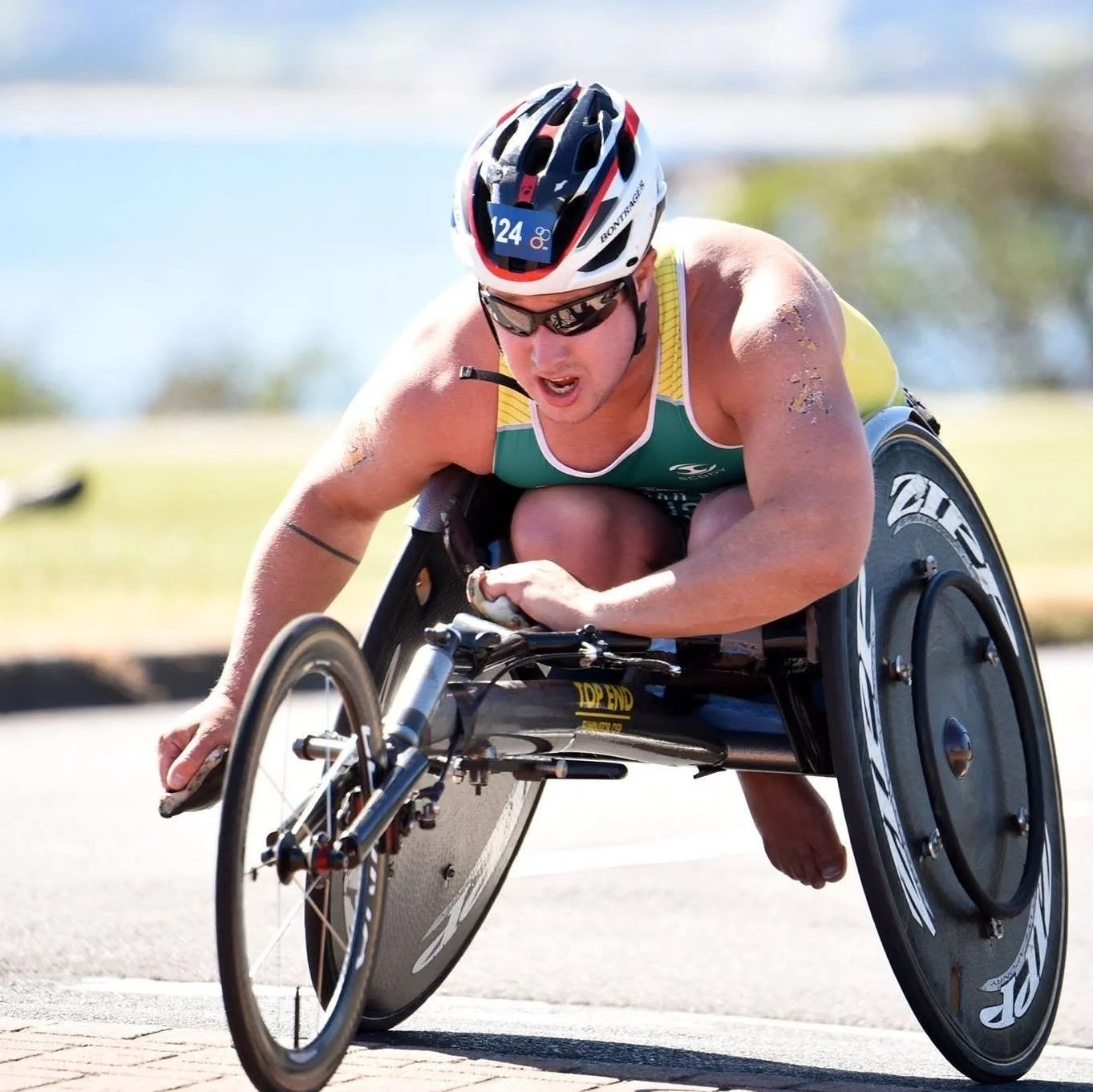
In 2013, Scott made the switch to para-triathlon, with the sport set to debut at the Paralympics in 2016. He had to learn to cycle from scratch, while drawing on his wheelchair pushing and his background as a water polo swimmer. He raced two world championships, in 2016 and 2017, finishing 8th in the world both times, his highest world ranking. Scott narrowly missed out on Paralympic selection, but he went on to represent Australia at the 2018 Commonwealth Games on the Gold Coast in para-triathlon, finishing 5th.
During this period, Scott and his wife also founded Push Adventures, an inclusive tourism business helping travel providers become more accessible. The idea grew out of their own experiences travelling together overseas.
Coming Home: Life at Estara Today
Scott joined Estara (then the Paraplegic & Quadriplegic Association of South Australia) in 2018, starting on a regional project which mapped spinal cord injury services across South Australia. Since then, he's worked across support coordination and peer support, and now sits on several state advisory bodies, including the Health Minister's Disability Advisory Council and a state government committee on transport and infrastructure.
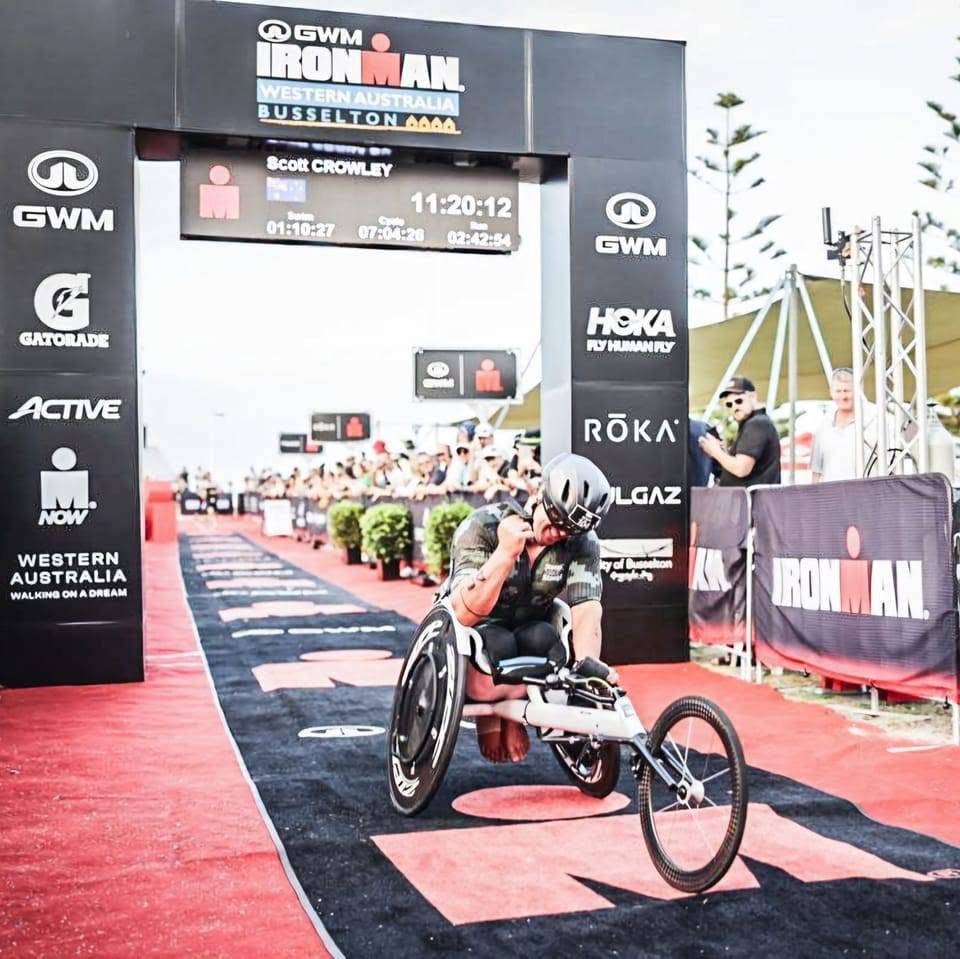
Sport, though, has remained the constant. Scott still swims several times a week, plays social basketball, and rides his mountain bike. In 2023, he completed the Busselton Ironman in Western Australia, a goal that had been delayed twice, first by a border closure and then by a heart scare in 2022. After a small, yet lifesaving surgery, he got the all clear to return to training and was back training for the race he'd chase for three years.
Now, Scott is bringing everything he's learned as an athlete, as a support coordinator, and as someone who found his own way into sport, into leading Wheelchair Community Sports SA.
“I went off a jump and I went too high, too fast, and landed back-first on a rock,” Scott says. “It was sort of instant, but it took a bit of time to realise the gravity of the situation. At that age, you’re sort of young and invincible. That’s the last thing on your mind when you’re doing those sorts of things.”
Scott’s Injury
Scott broke his back in January 2001, on a snowboarding trip in Whistler, Canada. He was 21, living in North Vancouver, and had been snowboarding there for eight years.
“Currently, there is no front door for wheelchair sport in SA” Scott says. “At the moment, it’s self-driven for everyone who wants to get involved. If we can be that front door for people, whether that’s wanting a hit of tennis on a Tuesday or pushing for Paralympic selection, then we’re in a great space. Sport is for everyone, at every level, and we can help make that happen.”