
From Mentee to Mentor. A Coffee With Molly
By Elise Thomas, Marketing and Communications Manager | estara
What happens when women support women.
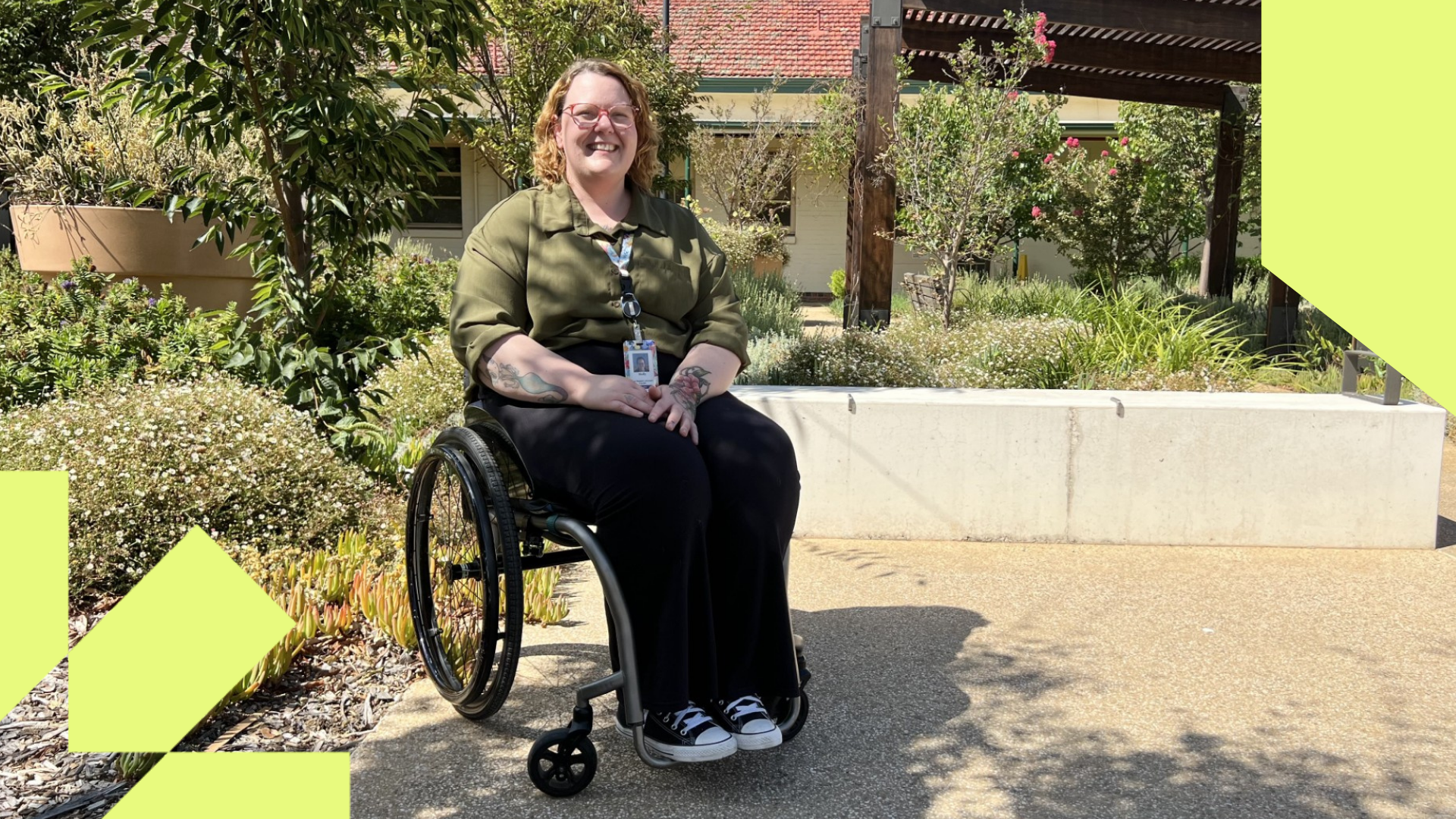
In the lead up to International Women’s Day, I sat down for a coffee with Molly, one of our Spinal Cord Injury Peer Support Mentors at estara. What started as a quick chat at the Repat turned into a morning filled with honesty, laughs and the kind of insight that only comes from lived experience.
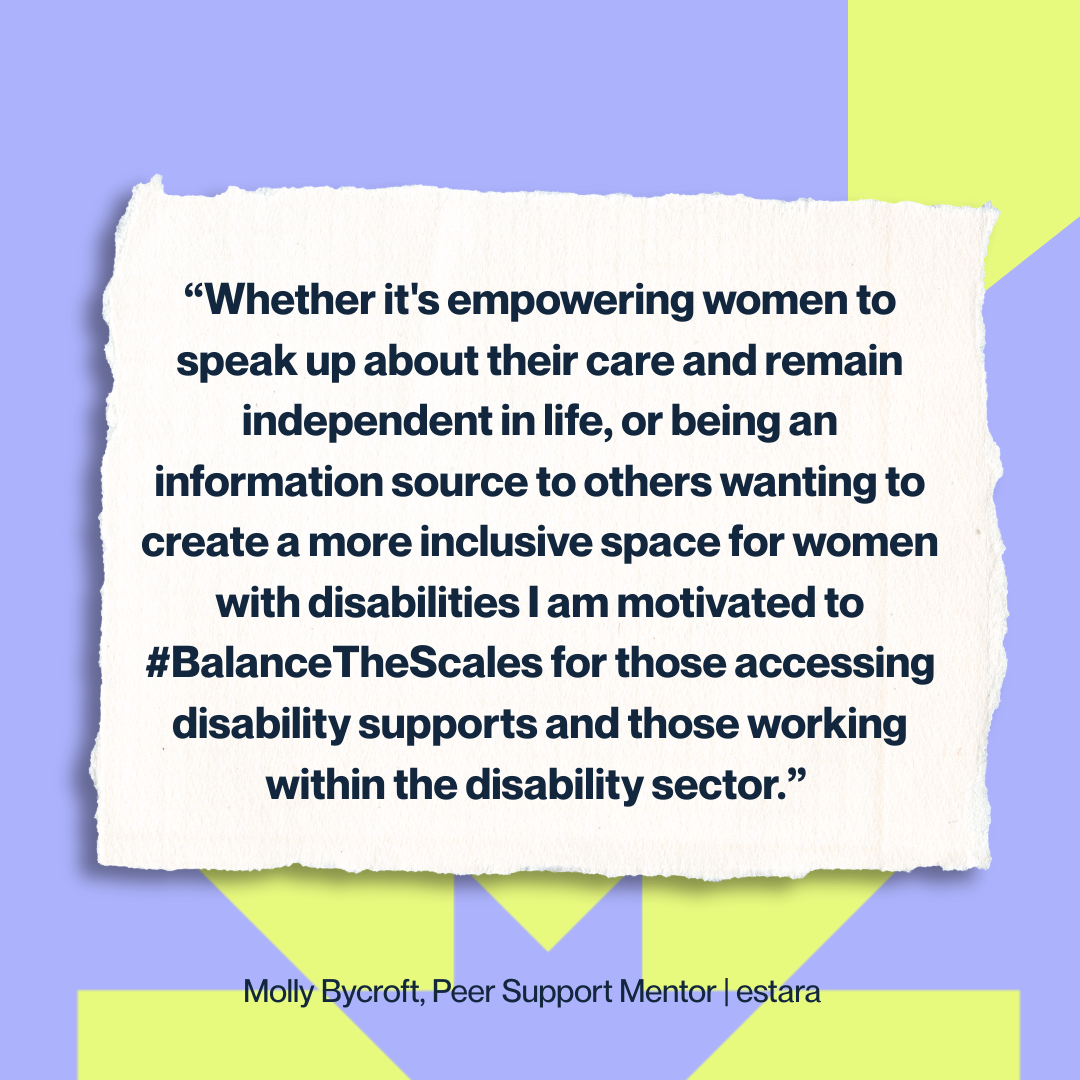
Molly also shares her thoughts with me on this year’s International Women’s Day theme #BalanceTheScales.

Inspired at age 19
Molly’s path to becoming a Peer Support Mentor started when she met another estara Peer Support Mentor, Vicky, when she was just 19. Newly readmitted to Hampstead Rehabilitation Centre after a sudden onset of transverse myelitis, which caused paralysis almost overnight, she connected with Vicky. Vicky first met Molly’s mum at Hampstead and through conversations, Molly met Vicky, and that connection became a turning point in Molly’s life. When Molly was discharged from Hampstead, she remembers sitting in the car with her mum and saying the words that would shape her future, ‘I want the job that Vicky has.
Fast forward to 2022 when she was able to grab that opportunity. The first person she thanked when she joined was Vicky. She told her, ‘This is where I have got today, because I met you.’
From mentee to mentor
Molly has now been part of the estara team for almost four years, bringing with her qualifications in case management, trauma counselling, and a Diploma in Art Therapy. But more importantly, she brings 19 years of lived experience as a wheelchair user.
She has worked as a ward clerk in the spinal cord injury unit, featured in magazines, blogs, and podcasts, and built global connections along the way.
When asked what being a Peer Support Mentor is all about, Molly says:
It’s about listening. Being someone who gets it. Sharing tips, offering emotional support, talking through everything from home modifications to fertility and to how to be a mum. It’s the everyday stuff that matters. Sometimes it’s reassurance on what they are going through is normal. Sometimes we have a good laugh.
Molly tells me about the importance of the word mentor, ‘People want to hear from people who have lived it.’
Creating spaces for women to connect
One of Molly’s proudest achievements is starting a Women’s Support Group. The group is a monthly informal social gathering of women with spinal cord injuries who come together at the Repat Hospital to talk, share, laugh and build community.
There wasn’t anything like it before in South Australia, so Molly saw the need and filled it.
Each session brings around 8 to 10 women, and once a year they host a larger mid-year event funded through a Lifetime Support Authority (LSA) grant.
The positive force in the room
One thing you notice about Molly right away is her optimism, even when talking about the challenges of everyday life like the number of transfers a day taking a physical toll. She told me how important it is to discuss a planned daily routine with people new to spinal cord injury:
You must change your mindset and think, do I really need to do that today? Or can it wait? A second trip to the shops is a whole extra set of transfers. That’s energy you won’t get back quickly.
She tells me some of the weirder questions people ask too, including “Are you in a wheelchair in your dreams?”
Early on, she says, she wasn’t. She still dreamed as if she were walking. But then, around age 20, her dreams changed. One night she dreamed she was walking through a park carrying her wheelchair like a backpack. Someone called out, ‘Hey where’s your wheelchair?’ Since that night, in her dreams Molly uses her wheelchair too.
Why she loves this work
Molly loves seeing people’s long-term journeys. Some of the faces she has met in the hospital, or through peer support, she reconnects with years down the track. Watching people grow more confident, more self-directed, more at ease in their day-to-day life is her greatest reward. She loves to help people through their fears. She says, ‘That’s the part of the job I love. To help squash some of those fears.’ And she does.
Outside of work
Outside of work, Molly is a mum to her young son, Cameron. She enjoys weightlifting, video games, playing the drums, and spending quality time with her family. She is usually halfway through many art projects which she promises to finish eventually
A full circle story
What began with a young woman drawing inspiration from a Peer Support Mentor has come full circle. Now Molly is the one offering that same support to others. Not just through her lived experience, but through her authenticity, humour, and generosity.
As we celebrate International Women’s Day, Molly’s story reminds us what can happen when women support women and how lives can change so quickly. Her story also shows how a conversation in a hospital 19 years ago can not just change the life of one person but can go on to be a positive force for change for many. This is Molly's legacy, and that of every peer mentor who does this work.